THE COMPLETE SOLUTION / EDITORIAL REVIEW
TOEM: A Photo Adventure
A charming observation puzzle built around useful photographs. Compact locations and character requests give the camera purpose, although the gentle challenge and short journey limit its scope.
Game facts
- Developer
- Something We Made
- Publisher
- Something We Made, popagenda
- Released
- 17 September 2021
- Platforms
- Windows · macOS · Linux (Steam edition)
- Model
- Paid game
- PEGI
- 3 — Nintendo Switch edition; not a separate PC classification
- Players
- Single-player
- Length
- Short
- Difficulty
- 1 / 5 · Gentle
- Steam Deck
- Verified
PEGI source ↗ · Steam Deck status source ↗
Edition: Base game
The score, explained
The interest and responsiveness of the core decisions and actions.
How progression, exploration and goals fit together.
The coherence of the visual, musical and narrative presentation.
How clearly the game explains its rules and offers useful ways to engage.
The depth of optional goals, alternative approaches and reasons to return.
Photography makes looking useful
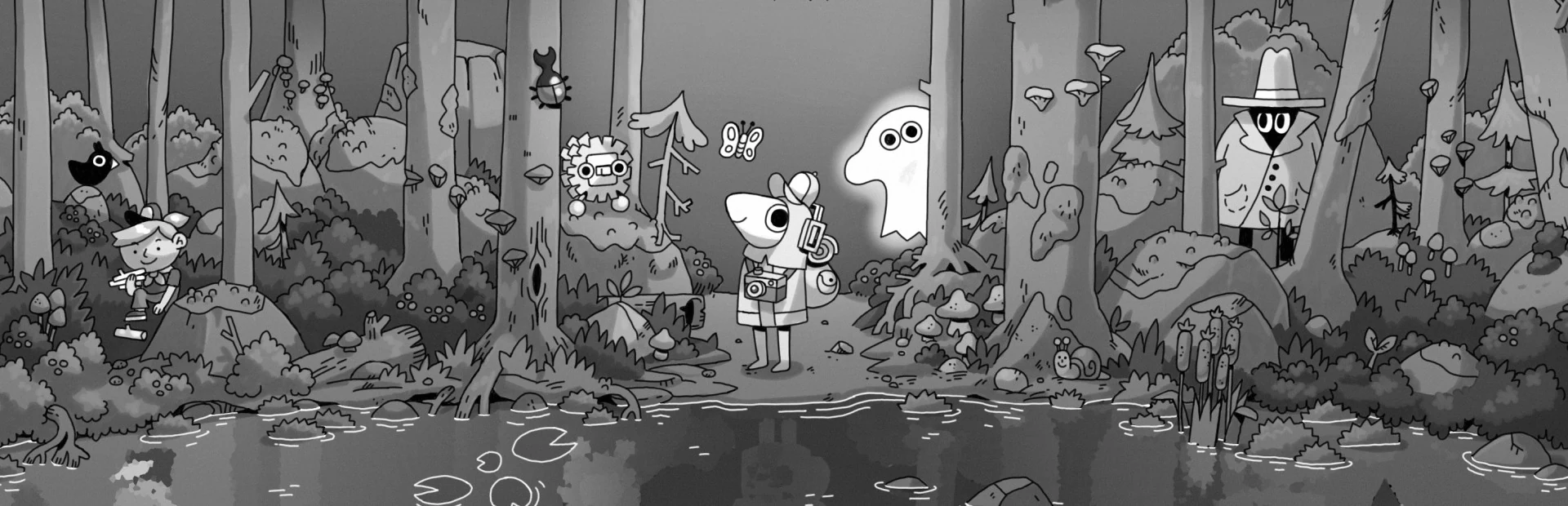
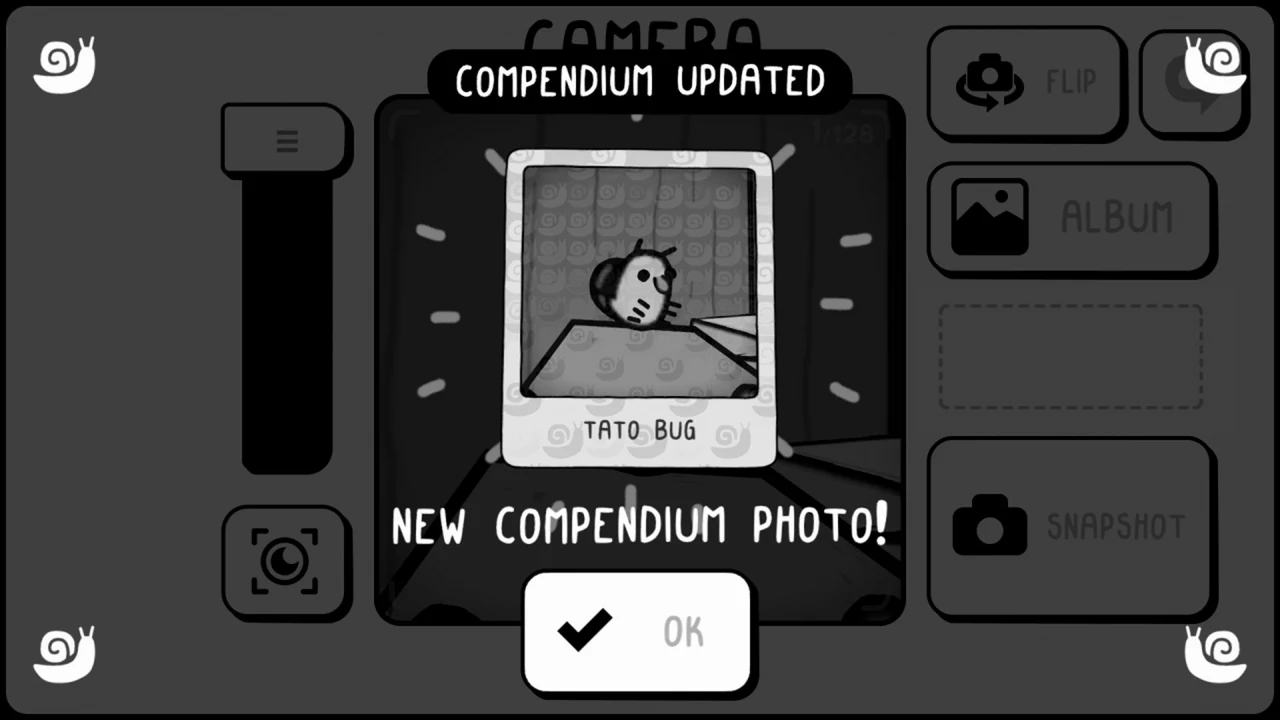
TOEM frames observation as a friendly photographic expedition. Arriving in a new area means meeting characters, reading their requests and deciding what the camera needs to notice. Stamps earned through helping people support progress, but the tasks are more varied than simply photographing every visible object. A request may depend on recognising a subject, finding the correct viewpoint or understanding how a scene can change. The opening teaches the player to look beyond the straightforward path between characters. Small environmental details can be clues, and an apparently decorative corner may contain the answer to somebody's problem. Its monochrome presentation helps separate shapes and compositions without making the landscape feel sterile. For a puzzle reader, the camera becomes a method of testing an interpretation: frame the suspected subject, take the picture and see whether the evidence fits.
Requests give a journey its shape
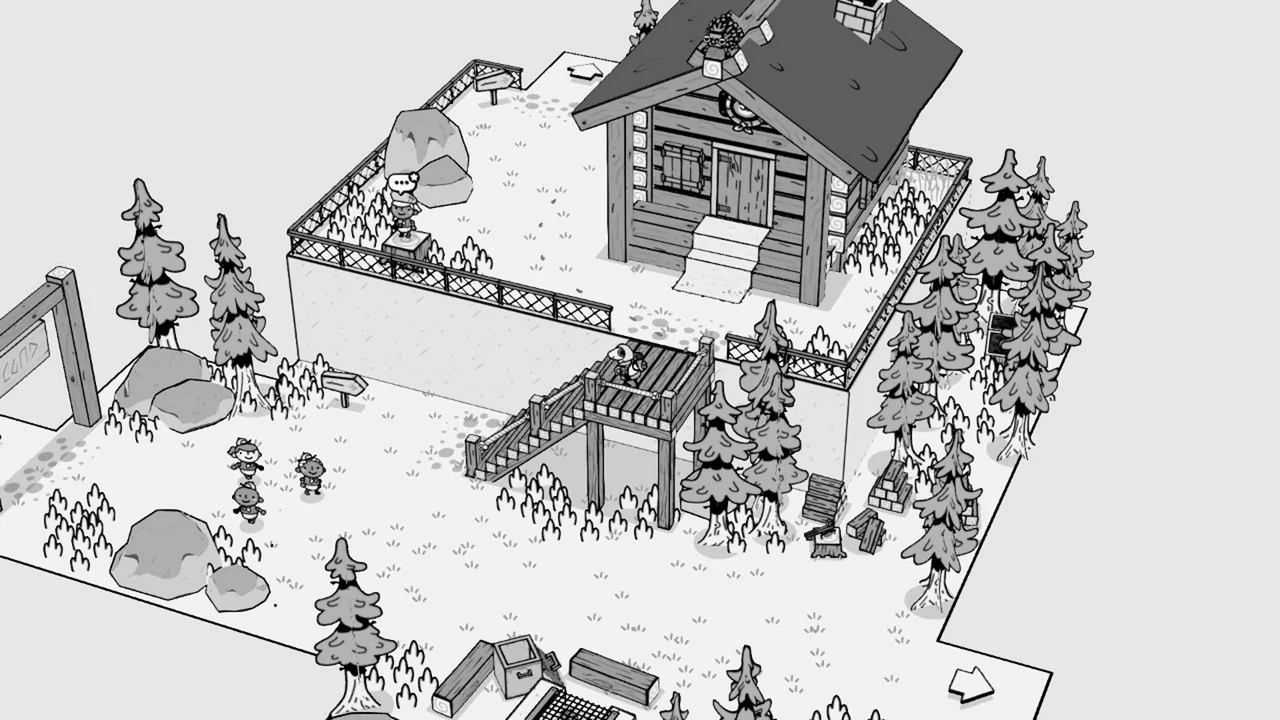
Photography gives TOEM a convincing link between attention and action. Instead of merely clicking an object after solving a clue, the player has to decide what belongs inside the frame. This makes viewpoint and recognition meaningful parts of the task. The characters' requests also give a social purpose to exploring small spaces, so optional observation feels connected to the place rather than attached as a collectible checklist. The compact areas help maintain that relationship; a clue can send the player back to a detail already noticed without requiring a vast search. The game's tone is generous, and its visual humour often supplies another reason to inspect an unexpected subject. Its best puzzles are modest but satisfying acts of recognition, where an ordinary-looking scene becomes useful because the player has learned what somebody is asking for.
A monochrome world with recognisable subjects
TOEM's gentle scale limits how far its puzzle ideas develop. Readers looking for long chains of deduction or demanding spatial systems may find many requests resolved before they become especially intricate. A stalled task can also depend on noticing one specific detail rather than discovering a reusable principle. That is appropriate to the observational premise, but it can make a missed clue feel arbitrary until the correct subject becomes visible. The main journey is relatively brief, and repeat visits cannot reproduce every first moment of recognition. There is little combat or mechanical pressure to supply a separate challenge. The recommendation therefore rests on enjoying the photographs, the small communities and the act of helping. Players who measure value mainly through difficulty or extensive replay systems should keep those priorities in mind.
Choose it for small discoveries
TOEM is an inviting choice for players who enjoy small mysteries grounded in ordinary observation. It suits readers who like looking closely at a place, interpreting a character's request and discovering that an overlooked detail has a purpose. Its approachable presentation makes it especially appealing when an elaborate rule system would feel like work. The camera provides enough structure for exploration to remain purposeful without demanding constant precision. Players seeking severe puzzles or a competitive challenge should consider a different kind of experience. The strongest reason to choose TOEM is its pleasant relationship between curiosity and kindness: noticing something can help somebody. Treat the journey as a compact collection of photographic discoveries, and its restraint becomes part of the charm instead of a promise of complexity that the game never intended to make.
The verdict
A charming observation puzzle built around useful photographs. Compact locations and character requests give the camera purpose, although the gentle challenge and short journey limit its scope.
Reasons to play
- Framing a photograph makes observation an active decision
- Character requests give exploration a clear social purpose
- Compact locations keep clue hunting manageable
Reasons to think twice
- Many tasks remain deliberately simple
- A missed visual detail can briefly halt an otherwise easy request
See the game
Assist & accessibility
Parents’ guide
Players: Single-player. No in-game purchase marker in the checked Steam listing. Separate downloadable content may be sold.
Age classification: 3. Nintendo Switch edition; not a separate PC classification
A useful starting tip
Treat each character's request as a clue about what to observe, then look beyond the most obvious subject before taking the photograph.
A different direction
Compare this with Chants of Sennaar: A thoughtful language deduction game in which understanding changes the world around you. The notebook supports careful inference, while mistaken assumptions and occasional stealth can interrupt the flow.
Official sources
Reviewed: November 2026
You might also like
 TUNICRead review →
 ANIMAL WELLRead review →
 DorfromantikRead review →