THE COMPLETE SOLUTION / EDITORIAL REVIEW
Dorfromantik
A beautifully legible placement puzzle. The landscape makes every commitment visible, and the limited tile supply gives attractive compositions a useful strategic tension.
Game facts
- Developer
- Toukana Interactive
- Publisher
- Toukana Interactive
- Released
- 28 April 2022
- Platforms
- Windows · macOS (Steam edition)
- Model
- Paid game
- PEGI
- 3 — Nintendo Switch edition; not a separate PC classification
- Players
- Single-player
- Length
- Medium
- Difficulty
- 2 / 5 · Approachable
- Steam Deck
- Verified
PEGI source ↗ · Steam Deck status source ↗
Edition: Base game
The score, explained
The interest and responsiveness of the core decisions and actions.
How progression, exploration and goals fit together.
The coherence of the visual, musical and narrative presentation.
How clearly the game explains its rules and offers useful ways to engage.
The depth of optional goals, alternative approaches and reasons to return.
A landscape made from decisions
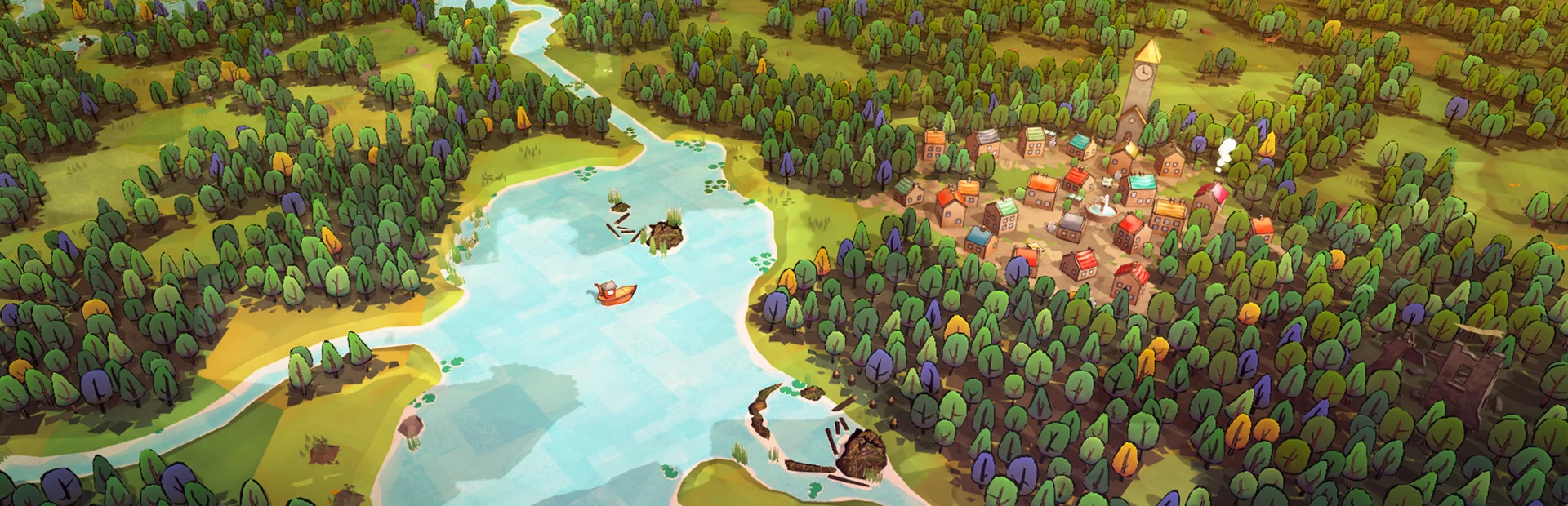
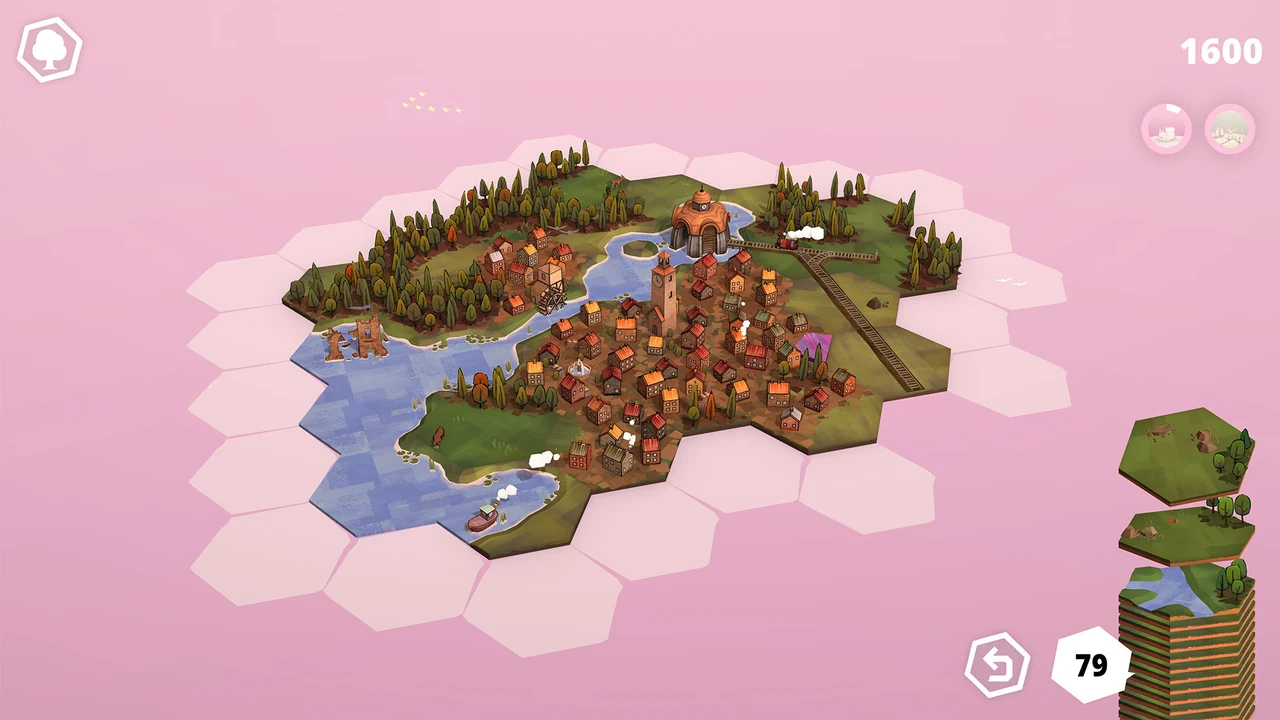
Dorfromantik turns a growing landscape into a problem of edges and commitments. Each hexagonal tile offers a combination of terrain features, and placing it changes the possibilities surrounding that location. Early forests, villages, fields and waterways are easy to appreciate as scenery, but the objectives encourage a more deliberate reading of the board. A placement can satisfy an immediate request while leaving awkward boundaries for the next draw. Because the tile supply matters, decoration and continuation become linked. The opening is approachable precisely because the consequences are visible: a railway extends in a particular direction, a forest remains open on another side, and an apparently convenient gap may become difficult to fill. The puzzle gradually shifts from finding a pleasant position to preserving useful options across the whole landscape.
The next tile keeps the plan open
Its strongest design decision is to make local satisfaction compete gently with future flexibility. Matching a tile neatly produces an immediate sense of order, yet the surrounding edges determine whether that decision was generous or restrictive. Objectives give a reason to develop particular features without eliminating the pleasure of composing the countryside. The landscape is therefore both a record of previous choices and a set of invitations for the next one. This is especially effective for puzzle players who enjoy spatial planning but dislike long rulebooks. The board itself explains much of the problem. Different sequences of available tiles also prevent a single attractive arrangement from becoming a universal solution. Good play grows from reading opportunities, managing unfinished features and knowing when an imperfect placement protects a more valuable possibility nearby.
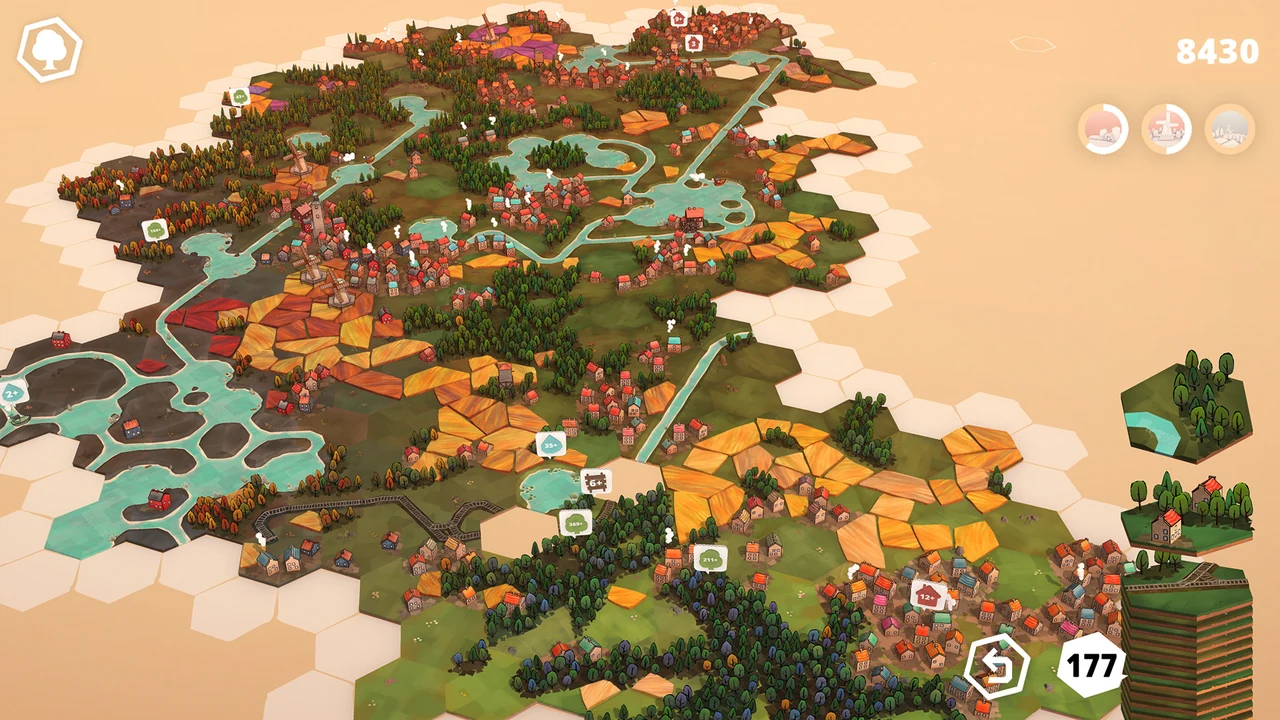
The board is worth looking at
The peaceful presentation can obscure how restrictive the objective-driven mode becomes. A player interested only in making a charming village may resent having a preferred composition complicated by the next tile or a particular completion requirement. Conversely, a competitive puzzle player may want more direct control over the available pieces than the draw provides. The central vocabulary remains deliberately narrow, so later attempts deepen familiar placement decisions instead of introducing an elaborate simulation. That focus is a strength for some readers and a limit for others. There is also no character-led narrative to pull a reluctant planner through a disappointing board. Dorfromantik works best when the placement process itself is the reward. Its separate creative possibilities are useful, but they serve a different purpose from the tension of sustaining an objective-based run.
Choose a puzzle that leaves a place behind
Choose Dorfromantik if you enjoy evaluating a small decision by its consequences for a larger pattern. It is particularly inviting for players who like tile games, visual organisation and the satisfaction of a landscape gradually becoming coherent. The challenge is readable enough to approach without memorising a complicated set of systems, while careful placement still leaves room for improvement. Players seeking a rich economy, individual citizens or a sequence of story missions should look closely at that narrower scope. This is a placement puzzle with a landscape as its visible result. It also suits a flexible attitude towards success: an imperfect board can still teach something about the edges you leave open. For Puzzle Fern readers, the recommendation rests on that elegant relationship between immediate fit and future possibility.
The verdict
A beautifully legible placement puzzle. The landscape makes every commitment visible, and the limited tile supply gives attractive compositions a useful strategic tension.
Reasons to play
- Visible edges make planning easy to understand
- Objectives connect attractive scenery with purposeful decisions
- New tile sequences encourage adaptable thinking
Reasons to think twice
- Objective play can conflict with a purely decorative plan
- The focused tile system offers little conventional narrative progression
See the game
Assist & accessibility
Explore the available settings and control options on the official game page before choosing your setup.
Parents’ guide
Players: Single-player. No in-game purchase marker in the checked Steam listing. Separate downloadable content may be sold.
Age classification: 3. Nintendo Switch edition; not a separate PC classification
A useful starting tip
Consider the open edges you will leave behind before placing a tile that completes the most obvious immediate objective.
A different direction
Compare this with Into the Breach: A superb tactical reasoning game. Clear enemy intentions let positioning and displacement carry the challenge, while campaign consequences make even the smallest board matter.
Official sources
Reviewed: November 2026
You might also like
 TUNICRead review →
 ANIMAL WELLRead review →
 Into the BreachRead review →