THE COMPLETE SOLUTION / EDITORIAL REVIEW
Into the Breach
A superb tactical reasoning game. Clear enemy intentions let positioning and displacement carry the challenge, while campaign consequences make even the smallest board matter.
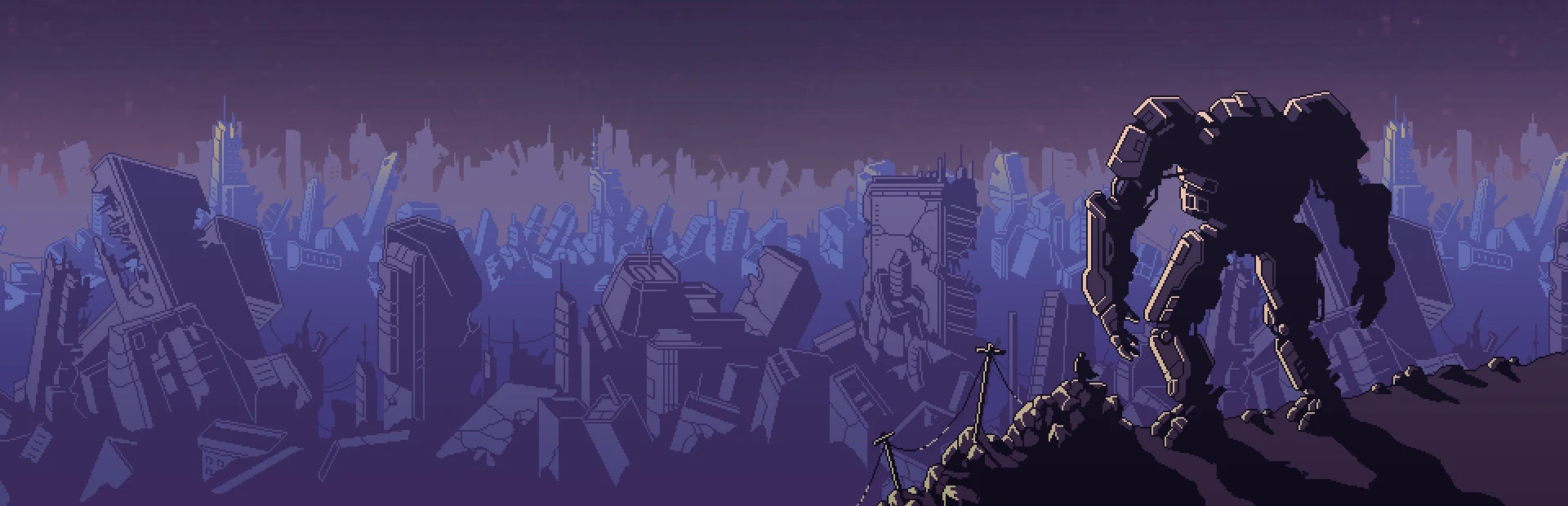
Game facts
- Developer
- Subset Games
- Publisher
- Subset Games
- Released
- 27 February 2018
- Platforms
- Windows · macOS · Linux (Steam edition)
- Model
- Paid game
- PEGI
- 12 · Bad Language — Steam UK listing
- Players
- Single-player
- Length
- Short
- Difficulty
- 4 / 5 · Challenging
- Steam Deck
- Verified
PEGI source ↗ · Steam Deck status source ↗
Edition: Base game
The score, explained
The interest and responsiveness of the core decisions and actions.
How progression, exploration and goals fit together.
The coherence of the visual, musical and narrative presentation.
How clearly the game explains its rules and offers useful ways to engage.
The depth of optional goals, alternative approaches and reasons to return.
Solve the attack that is already visible
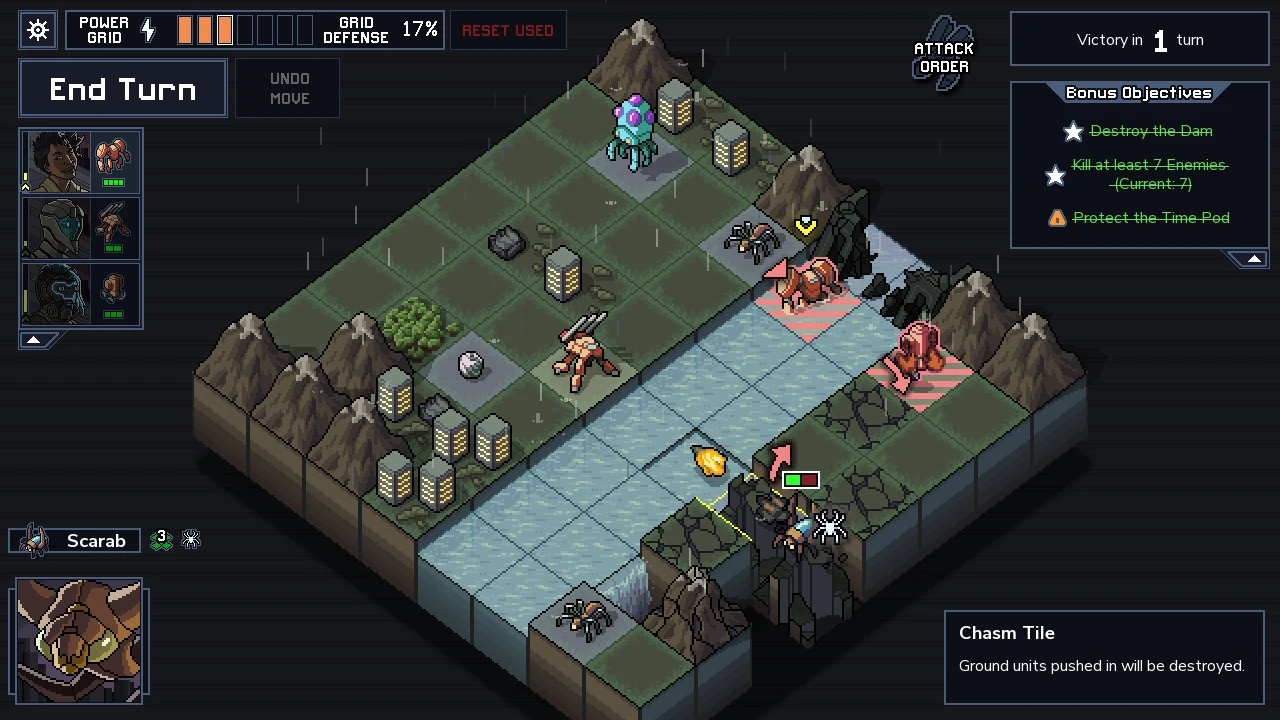
Into the Breach presents a battlefield as a question with most of its evidence already visible. Three mechs occupy a small grid, enemies announce their attacks, and buildings need protection. The first useful lesson is that preventing damage can matter more than destroying the creature responsible. A shove may redirect an attack, remove its target or create a collision that solves another problem. Because actions resolve within a compact space, the consequences of each move are unusually easy to inspect. The opening battles teach players to count threats, consider their order and examine the available terrain before spending an action. This gives the game the character of a tactical puzzle even though the campaign includes persistent consequences and changing equipment. The essential question is how to make a few interventions cover several urgent problems.
Small battles feed a larger attempt
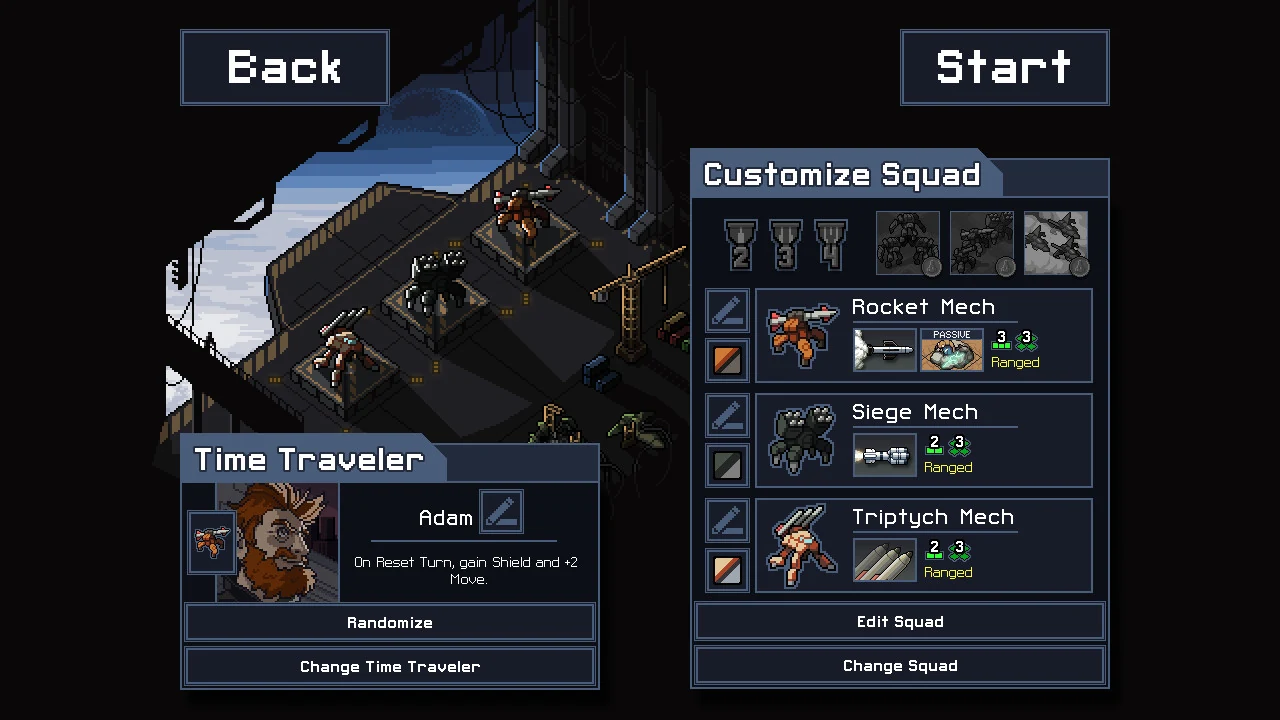
The clarity of enemy intent creates room for sophisticated decisions. You can compare outcomes because the game exposes the danger that needs to be managed, then lets displacement, blocking and attack order change the calculation. Different mech squads alter the verbs available, which changes how the same basic battlefield should be read. Protecting the power grid also keeps the objective broader than personal survival. A mech can remain operational while the situation becomes unacceptable elsewhere, so the player has to weigh the board as a whole. The strongest turns often use one action to address several pressures at once. That compression is the game's central achievement: a small map can contain a substantial chain of reasoning. Its puzzle appeal comes from finding an arrangement that turns competing threats into opportunities for one another.
A board built around consequences
Complete information does not mean complete freedom. The available weapons, positions and objectives may leave no way to preserve everything, and accepting a loss can feel uncomfortable in a game that otherwise invites exact solutions. A missed interaction can also become apparent only after committing an important action. Although the compact battles support careful inspection, the campaign consequences make experimentation less carefree than in a standalone puzzle collection. Players who want to explore a sprawling map or build a large army will find the scale restrictive. There is narrative context, but the repeated pleasure comes from tactical arrangement rather than extensive character scenes. The recommendation therefore depends on enjoying difficult prioritisation. Sometimes the satisfying answer is the least damaging compromise, and the game expects the player to recognise that as a legitimate piece of reasoning.
For players who enjoy reconsidering one move
Into the Breach belongs near the top of the list for puzzle players interested in tactics. It offers meaningful time to think, clearly stated threats and a small enough board for close analysis to remain practical. Enjoyment is likely to be highest if moving an enemy into the wrong place sounds as appealing as dealing more damage. It also suits players who like trying a new toolset and discovering how it changes their habits. Anyone looking for a forgiving sequence of riddles should remember that these puzzles sit inside a campaign where decisions persist. Accepting imperfect outcomes is part of the challenge. For readers comfortable with that pressure, the game provides a remarkably concentrated exercise in positioning, consequence and making several apparently separate problems answer one another.
The verdict
A superb tactical reasoning game. Clear enemy intentions let positioning and displacement carry the challenge, while campaign consequences make even the smallest board matter.
Reasons to play
- Telegraphed attacks provide concrete evidence for planning
- Displacement can solve several threats with one action
- Different squads change the logic of a familiar battlefield
Reasons to think twice
- Some turns demand an uncomfortable sacrifice
- Campaign consequences make experimentation less forgiving than a puzzle collection
See the game
Assist & accessibility
Explore the available settings and control options on the official game page before choosing your setup.
Parents’ guide
Players: Single-player. No in-game purchase marker in the checked Steam listing. Separate downloadable content may be sold.
Age classification: 12. Bad Language Steam UK listing
A useful starting tip
Look for a move that prevents several attacks through displacement before assuming every threat must be destroyed this turn.
A different direction
Compare this with Mini Metro: A precise transport puzzle whose abstraction makes structural mistakes visible. The pleasure comes from improving connections, while growing demand keeps a neat diagram from becoming a permanent solution.
Official sources
Reviewed: November 2026
You might also like
 TUNICRead review →
 ANIMAL WELLRead review →
 DorfromantikRead review →