THE COMPLETE SOLUTION / EDITORIAL REVIEW
Mini Metro
A precise transport puzzle whose abstraction makes structural mistakes visible. The pleasure comes from improving connections, while growing demand keeps a neat diagram from becoming a permanent solution.

Game facts
- Developer
- Dinosaur Polo Club
- Publisher
- Dinosaur Polo Club
- Released
- 6 November 2015
- Platforms
- Windows · macOS · Linux (Steam edition)
- Model
- Paid game
- PEGI
- 3 — Nintendo Switch edition; not a separate PC classification
- Players
- Single-player
- Length
- Short
- Difficulty
- 3 / 5 · Moderate
- Steam Deck
- Verified
PEGI source ↗ · Steam Deck status source ↗
Edition: Base game
The score, explained
The interest and responsiveness of the core decisions and actions.
How progression, exploration and goals fit together.
The coherence of the visual, musical and narrative presentation.
How clearly the game explains its rules and offers useful ways to engage.
The depth of optional goals, alternative approaches and reasons to return.
A line on the map becomes a service
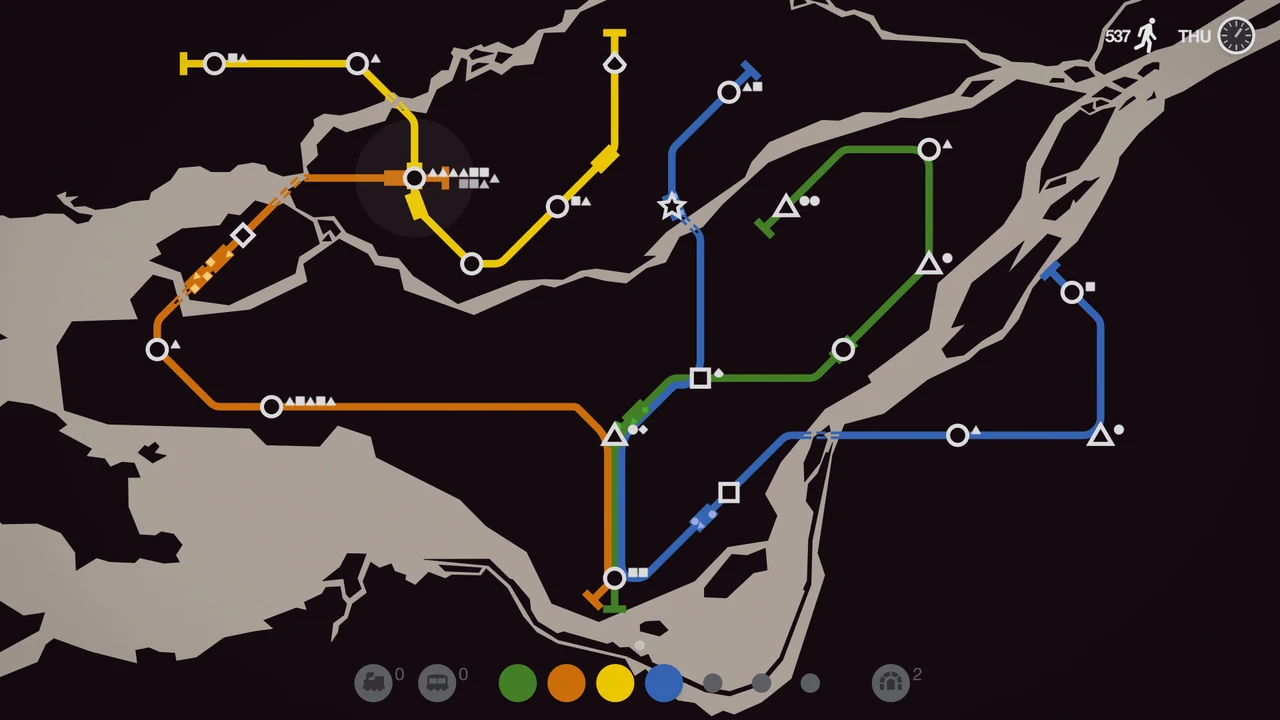
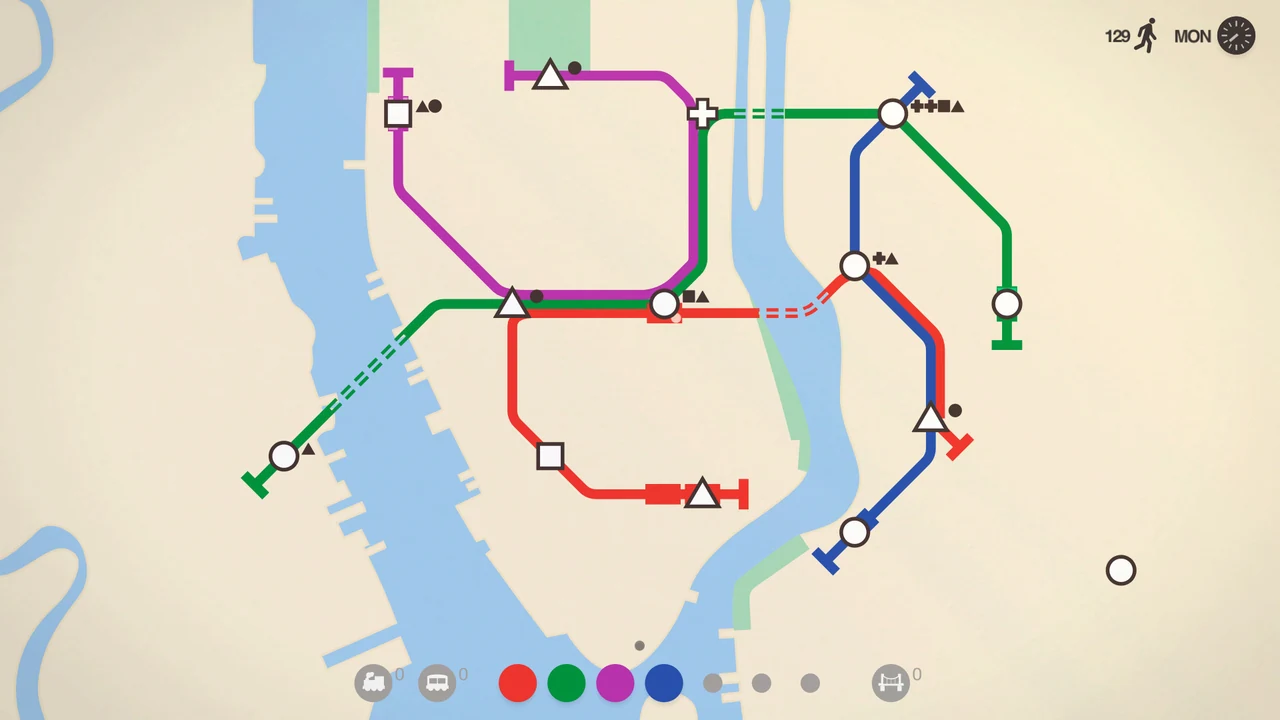
Mini Metro introduces its transport puzzle through a diagram. Stations appear as simple shapes, passengers carry destination symbols, and a line drawn between stops becomes a working railway. The first network is easy to follow, which makes its later problems especially instructive. A new station may require a longer route, an extra crossing or a transfer that changes how several existing stops function. The early question is therefore about the shape of the whole network, even when the immediate task looks like connecting one isolated point. Trains and carriages add capacity, but they cannot automatically repair a badly organised route. Watching passengers accumulate teaches the player to separate demand from movement. The diagram remains clean while the relationships underneath become increasingly difficult to balance with the resources currently available.
Growth keeps the plan provisional
The abstraction is more than a visual style. By removing most of the scenery, Mini Metro makes the network itself the object of attention. You can read a line's length, its interchange points and the shapes it serves without searching through a detailed city model. This helps the game express a useful planning lesson: extra capacity and better structure solve different problems. A carriage can relieve pressure locally, whereas a revised route may improve several journeys at once. The limited resources require judgement about which intervention matters most. Different city layouts also alter the cost of crossing water and the opportunities for efficient links. For puzzle players, the attraction is this continuous feedback between an economical visual language and increasingly consequential choices. The rules stay compact while the drawing becomes a demanding piece of reasoning.
The map is also the interface
Mini Metro can look more serene than it feels once overcrowding begins to spread. The pressure of maintaining a working network discourages the leisurely reconsideration that its diagrammatic presentation seems to invite. A route can also be difficult to judge without watching it operate for a while, so a plausible revision may consume attention before its weakness becomes clear. Players seeking a fixed puzzle with an ideal final arrangement should expect a different structure. The city continues to develop, and a good answer may need replacement soon after it succeeds. Its sparse visual world leaves little narrative diversion from that central task. The game is highly focused, which also means that a dislike of transfers, congestion or repeated network revisions has few secondary attractions to soften the experience.
Return to test a different connection
Choose Mini Metro for an elegant exercise in organising connections under constraint. It is well suited to players who enjoy transit diagrams, abstract strategy and the idea that moving one line can improve an entire system. Close observation matters more than decorative ambition, and a willingness to rebuild helps when an initially sensible plan stops serving the city. The recommendation is less strong for someone looking for a relaxed drawing toy or a story-led campaign. Even with its spare presentation, the transport problem becomes urgent. It also rewards a particular kind of satisfaction: recognising why a station is crowded, making a structural correction and seeing the passengers begin to flow. If that feedback sounds appealing, the game's narrow focus is an advantage rather than a shortage of things to do.
The verdict
A precise transport puzzle whose abstraction makes structural mistakes visible. The pleasure comes from improving connections, while growing demand keeps a neat diagram from becoming a permanent solution.
Reasons to play
- Simple symbols make a complex network readable
- Capacity and route design create different kinds of decisions
- City layouts change the value of crossings and interchanges
Reasons to think twice
- Overcrowding makes later play considerably less serene
- A successful network must keep changing as new stations appear
See the game
Assist & accessibility
Explore the available settings and control options on the official game page before choosing your setup.
Parents’ guide
Players: Single-player. No in-game purchase marker in the checked Steam listing. Separate downloadable content may be sold.
Age classification: 3. Nintendo Switch edition; not a separate PC classification
A useful starting tip
Investigate the cause of a crowded station before adding another long line; an awkward transfer can be more important than raw capacity.
A different direction
Compare this with Mini Motorways: An accessible traffic puzzle with substantial planning beneath its clean map. Watching a network fail and improving its structure is compelling, provided you enjoy adapting under pressure.
Official sources
Reviewed: November 2026
You might also like
 TUNICRead review →
 ANIMAL WELLRead review →
 DorfromantikRead review →