THE COMPLETE SOLUTION / EDITORIAL REVIEW
Mini Motorways
An accessible traffic puzzle with substantial planning beneath its clean map. Watching a network fail and improving its structure is compelling, provided you enjoy adapting under pressure.

Game facts
- Developer
- Dinosaur Polo Club
- Publisher
- Dinosaur Polo Club
- Released
- 20 July 2021
- Platforms
- Windows · macOS (Steam edition)
- Model
- Paid game
- PEGI
- 3 — Nintendo Switch edition; not a separate PC classification
- Players
- Single-player
- Length
- Short
- Difficulty
- 3 / 5 · Moderate
- Steam Deck
- Verified
PEGI source ↗ · Steam Deck status source ↗
Edition: Base game
The score, explained
The interest and responsiveness of the core decisions and actions.
How progression, exploration and goals fit together.
The coherence of the visual, musical and narrative presentation.
How clearly the game explains its rules and offers useful ways to engage.
The depth of optional goals, alternative approaches and reasons to return.
Draw a road, change the whole network
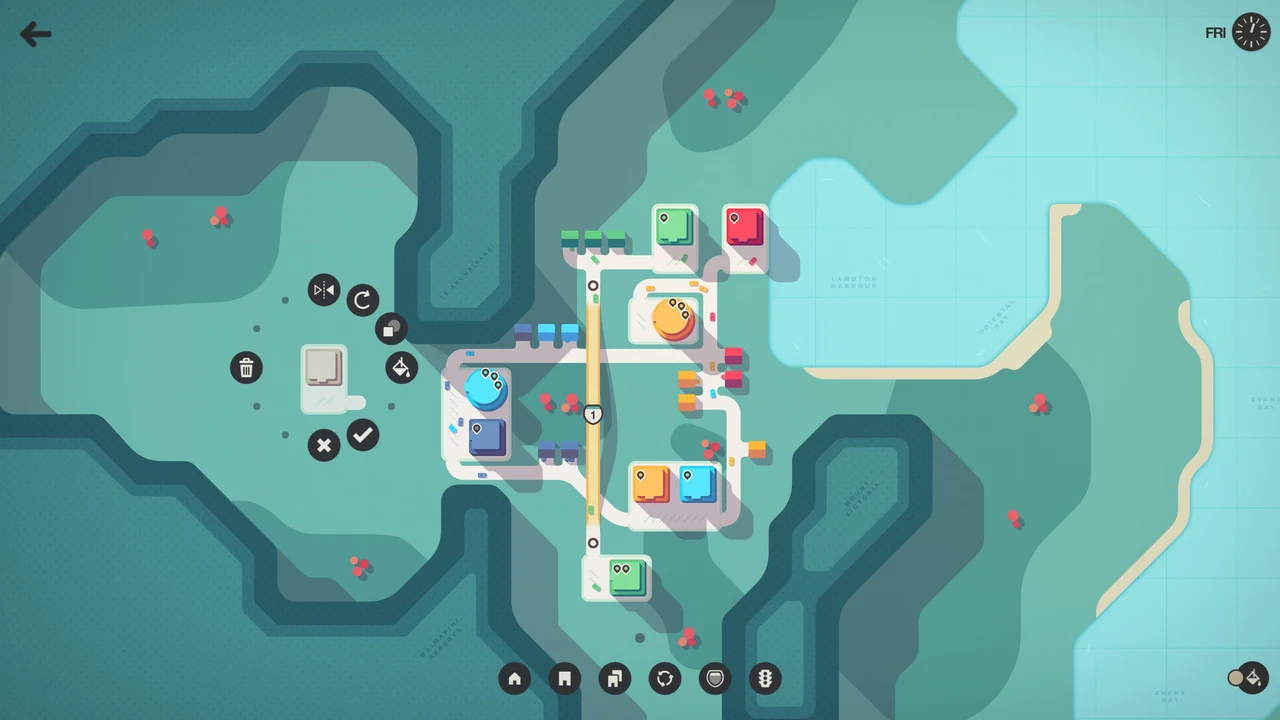
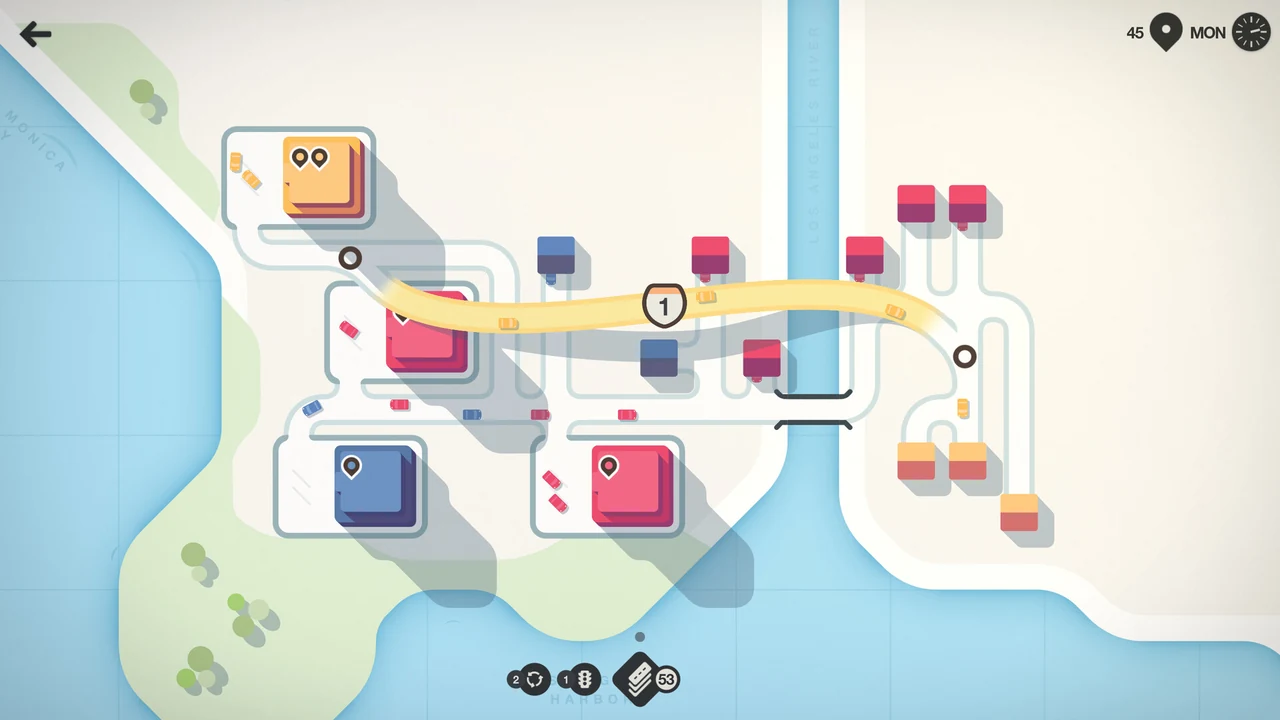
Mini Motorways starts with a road network small enough to understand at a glance. Homes need connections to matching destinations, and the first stretches of road seem obvious. New buildings quickly turn that tidy drawing into a planning problem. An extra junction can help a fresh destination while slowing traffic that previously moved freely. The opening teaches a useful distinction between connecting something and providing it with a sustainable route. Road pieces and later upgrades give those decisions a material limit, so rearranging an existing network can be more valuable than extending it. For a puzzle-minded player, the city becomes a changing diagram of demand. The task is to identify where journeys interfere, then decide which parts of the network should remain connected and which deserve a more direct, independent path.
Choose pressure or room to experiment
The design is strongest when a visible queue reveals a structural mistake. Traffic gives immediate feedback, allowing a road network to be read as evidence rather than judged only by its appearance. Limited resources prevent every problem from receiving the most convenient upgrade, and the city keeps growing while the player balances local fixes against broader organisation. This makes the puzzle dynamic: a successful answer has to retain enough flexibility for the next development. Different maps alter the importance of crossings and available space, while recurring challenges provide reasons to reconsider familiar planning habits. The apparent simplicity of drawing a line is therefore deceptive in a useful way. A road establishes relationships among several destinations, and improving one of those relationships can make another less efficient. The challenge emerges naturally from that interaction.
A readable city in miniature
Because the city develops during play, a carefully organised network can become awkward for reasons outside the player's preferred plan. Responding well matters, but the next building location may still force a compromise. This can frustrate readers who want a puzzle with a fixed starting state and a definitive elegant answer. Visual simplicity also makes some underlying traffic behaviour harder to predict from the road drawing alone. A connection that looks sensible can create an unexpectedly troublesome junction. The game asks for diagnosis under growing pressure, not leisurely perfection without consequences. There is no conventional story campaign to give a troubled network another kind of meaning. If restarting and applying a better principle feels like repetition rather than discovery, the long-term appeal will be narrower than the inviting first impression suggests.
For planners who like revising their work
Mini Motorways is a strong choice for players who enjoy watching a system expose the consequences of their decisions. It suits a practical kind of puzzle solving: identify the bottleneck, propose a change, then observe whether the traffic actually improves. The presentation is approachable, but the need to adapt a living network makes it more demanding than a decorative city sketch. Players who prefer fixed riddles may appreciate the idea without enjoying its escalating pressure. It is also worth distinguishing the traffic problem from a broader city-building fantasy; the focus stays on movement and connections. The ideal reader enjoys revising a plan rather than defending it at any cost. For that audience, each growing city becomes a clear, compact lesson in routing, resource allocation and the hidden costs of convenient junctions.
The verdict
An accessible traffic puzzle with substantial planning beneath its clean map. Watching a network fail and improving its structure is compelling, provided you enjoy adapting under pressure.
Reasons to play
- Moving traffic makes network problems observable
- Limited upgrades give route choices practical weight
- Growing cities reward flexible plans and useful revisions
Reasons to think twice
- New building locations can upset an elegant arrangement
- Escalating demand leaves less room for leisurely perfection
See the game
Assist & accessibility
Explore the available settings and control options on the official game page before choosing your setup.
Parents’ guide
Players: Single-player. No in-game purchase marker in the checked Steam listing. Separate downloadable content may be sold.
Age classification: 3. Nintendo Switch edition; not a separate PC classification
A useful starting tip
Look at where traffic converges before extending a road; a convenient connection now can create a bottleneck as the city grows.
A different direction
Compare this with Mini Metro: A precise transport puzzle whose abstraction makes structural mistakes visible. The pleasure comes from improving connections, while growing demand keeps a neat diagram from becoming a permanent solution.
Official sources
Reviewed: November 2026
You might also like
 TUNICRead review →
 ANIMAL WELLRead review →
 DorfromantikRead review →