THE COMPLETE SOLUTION / EDITORIAL REVIEW
Loop Hero
An absorbing systems puzzle about constructing the challenge you intend to survive. Tile interactions and expedition timing provide depth, though indirect control and repeated preparation require patience.
Game facts
- Developer
- Four Quarters
- Publisher
- Devolver Digital
- Released
- 4 March 2021
- Platforms
- Windows · macOS · Linux (Steam edition)
- Model
- Paid game
- PEGI
- 12 — Nintendo Switch edition; not a separate PC classification
- Players
- Single-player
- Length
- Long
- Difficulty
- 2 / 5 · Moderate
- Steam Deck
- Playable
PEGI source ↗ · Steam Deck status source ↗
Edition: Base game
The score, explained
The interest and responsiveness of the core decisions and actions.
How progression, exploration and goals fit together.
The coherence of the visual, musical and narrative presentation.
How clearly the game explains its rules and offers useful ways to engage.
The depth of optional goals, alternative approaches and reasons to return.
You design the trouble ahead
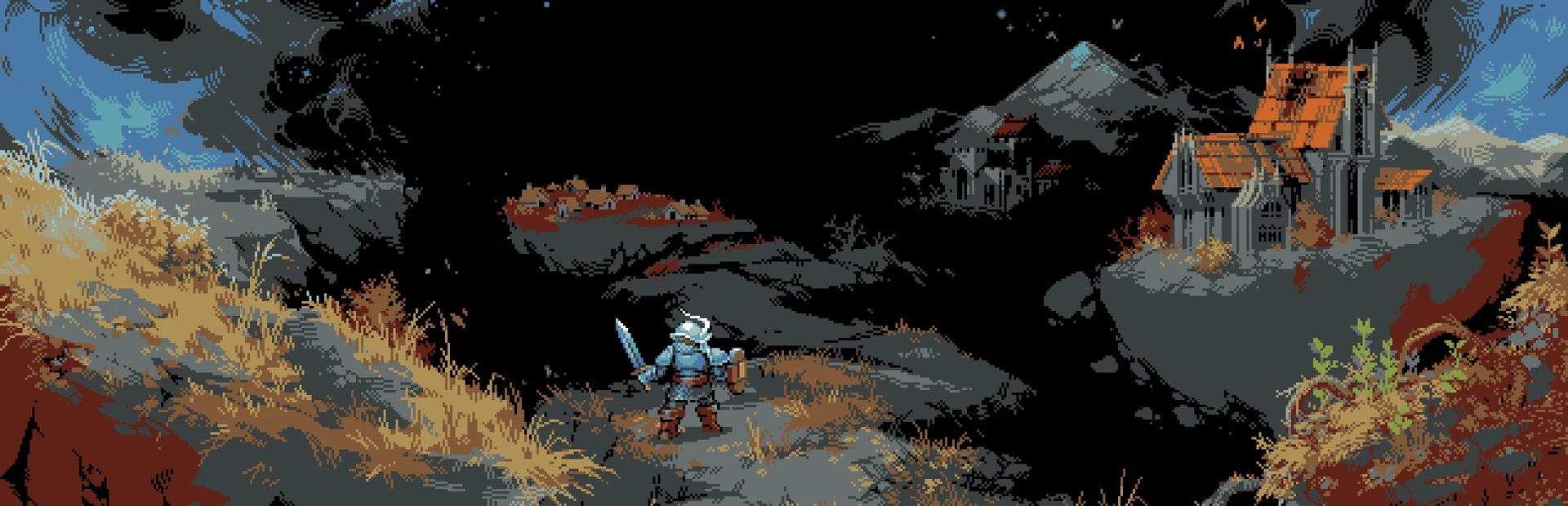
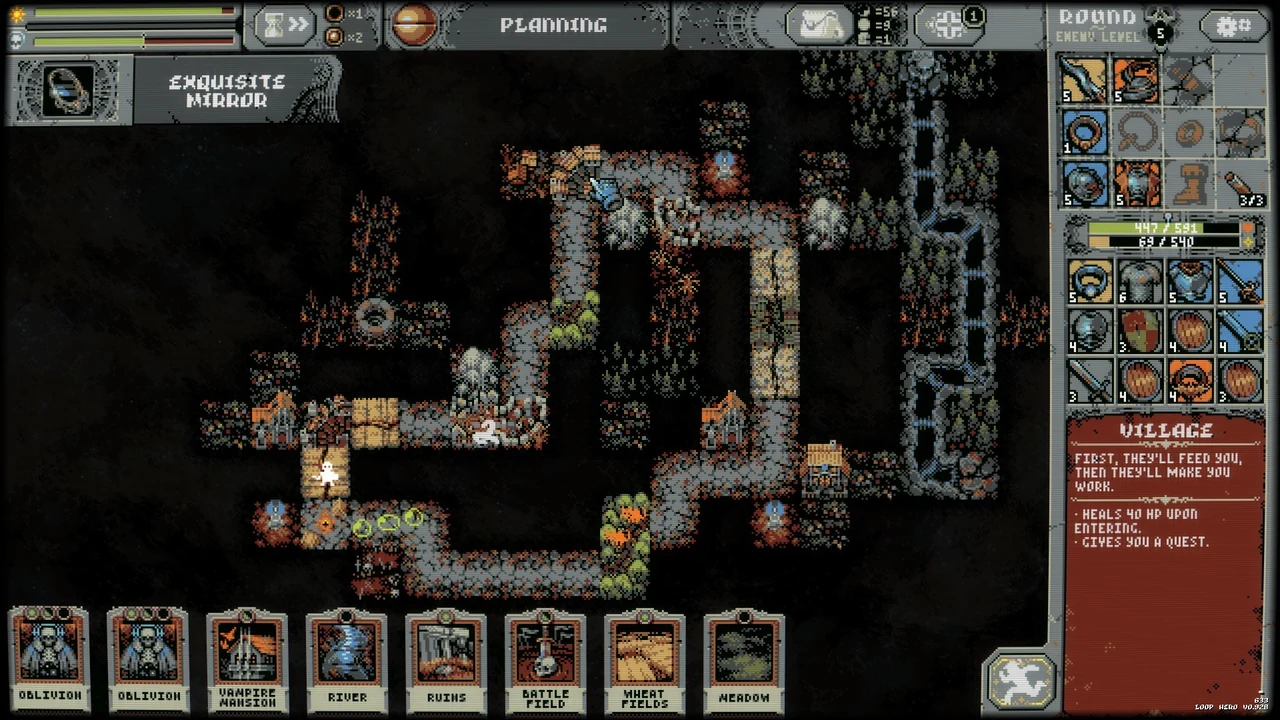
Loop Hero gives the player an unusual planning role: the hero walks and fights, while the player constructs much of the route around that activity. Terrain cards change the loop, enemies provide equipment, and each additional lap tests whether the current arrangement remains sustainable. The opening makes this division clear. You cannot solve every danger through direct movement, so the meaningful question is what kind of route to create and when to stop extending the expedition. A tile can offer an attractive benefit while also increasing future pressure. For puzzle readers, this produces a system to model rather than a room to complete. Equipment choices and returning resources to camp connect immediate decisions with later possibilities. The first useful skill is learning to read an apparently beneficial placement across several laps instead of only the next encounter.
An expedition is part of a larger plan
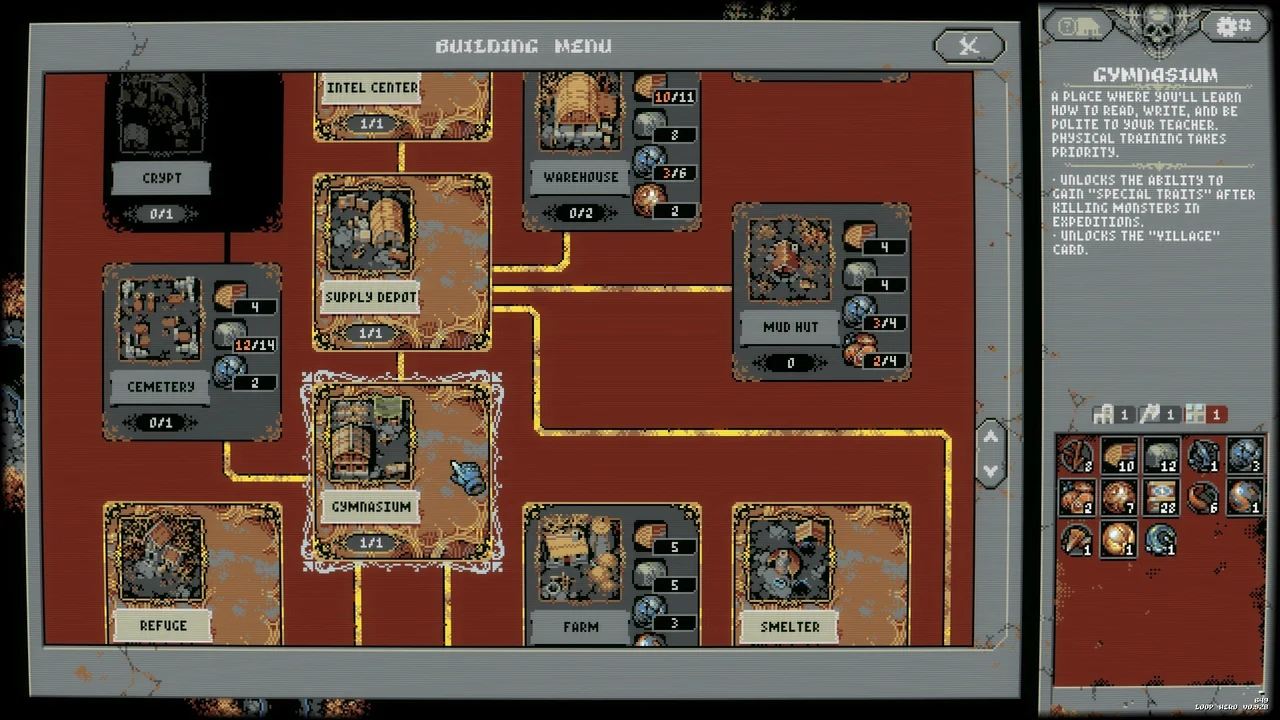
The compelling idea is that the player helps author the difficulty they must survive. Placing terrain, choosing equipment and deciding when to return create a feedback loop between ambition and restraint. Tile relationships also reward experimentation: the value of a location can depend on what surrounds it, making the board a collection of interactions rather than independent bonuses. Different classes and card selections change how those interactions should be judged. The camp supplies a longer horizon, giving resources recovered from one expedition a role in future attempts. For a puzzle-oriented audience, the most interesting work is identifying a combination that supports itself. A stronger hero, a manageable encounter pattern and a useful source of resources all need to fit together. The route becomes an evolving hypothesis about how the game's systems can cooperate.
A ruined world expressed as a system
Indirect control is an essential limitation, not a temporary stage. Once an encounter begins, the outcome depends heavily on the setup, equipment and systems already in place. Players who want to rescue a poor decision through precise movement may find that distance frustrating. The feedback can also arrive slowly: a placement that seems harmless on one lap may become a problem later, after several additional commitments complicate the diagnosis. Progress at camp gives unsuccessful attempts value, but it can make the repeated early stages feel like resource work when the player already understands the immediate problem. Loop Hero therefore asks for patience with both repetition and delayed consequences. Its puzzle appeal is strongest at the level of relationships among systems, rather than through a constant stream of distinct, immediately solvable challenges.
Return with a different hypothesis
Choose Loop Hero if you enjoy building a system and watching it reveal whether your assumptions were sound. It suits players interested in combinations, escalating risk and the decision to leave an expedition before ambition overwhelms preparation. The automatic movement is an advantage when the appeal lies in planning, but a serious caveat when direct action is central to enjoyment. A willingness to experiment with terrain relationships and different setups gives the game more depth than simply selecting the strongest-looking item. Readers who prefer concise, handcrafted puzzle rooms should expect a more repetitive structure. The recommendation is for a patient systems thinker who enjoys revising a design after seeing it operate. Here, the satisfying discovery is often a better relationship between several moving parts, rather than the answer to a single explicit riddle.
The verdict
An absorbing systems puzzle about constructing the challenge you intend to survive. Tile interactions and expedition timing provide depth, though indirect control and repeated preparation require patience.
Reasons to play
- Terrain choices make the player responsible for future pressure
- Tile relationships reward structured experimentation
- Camp development connects short expeditions with longer plans
Reasons to think twice
- Automatic combat limits last-minute intervention
- Delayed feedback and repeated preparation can slow experimentation
See the game
Assist & accessibility
Explore the available settings and control options on the official game page before choosing your setup.
Parents’ guide
Players: Single-player. No in-game purchase marker in the checked Steam listing. Separate downloadable content may be sold.
Age classification: 12. Nintendo Switch edition; not a separate PC classification
A useful starting tip
Think about the danger a new tile creates across several laps, not only the reward it offers immediately.
A different direction
Compare this with ANIMAL WELL: An inventive habitat of interlocking mysteries. Its small inventory supports unusually rich experimentation, while the sparse guidance makes patience an essential part of the experience.
Official sources
Reviewed: November 2026
You might also like
 TUNICRead review →
 ANIMAL WELLRead review →
 DorfromantikRead review →