THE COMPLETE SOLUTION / EDITORIAL REVIEW
Jusant
A focused climbing adventure with satisfying physical reasoning. Reading a wall and establishing a workable route are its strengths; the measured, specialised activity determines whether the journey will appeal.
Game facts
- Developer
- DON'T NOD
- Publisher
- DON'T NOD
- Released
- 31 October 2023
- Platforms
- Windows (Steam edition)
- Model
- Paid game
- PEGI
- 3 — Xbox UK edition edition; not a separate PC classification
- Players
- Single-player
- Length
- Short
- Difficulty
- 3 / 5 · Approachable
- Steam Deck
- Verified
PEGI source ↗ · Steam Deck status source ↗
Edition: Base game
The score, explained
The interest and responsiveness of the core decisions and actions.
How progression, exploration and goals fit together.
The coherence of the visual, musical and narrative presentation.
How clearly the game explains its rules and offers useful ways to engage.
The depth of optional goals, alternative approaches and reasons to return.
Climbing becomes the puzzle
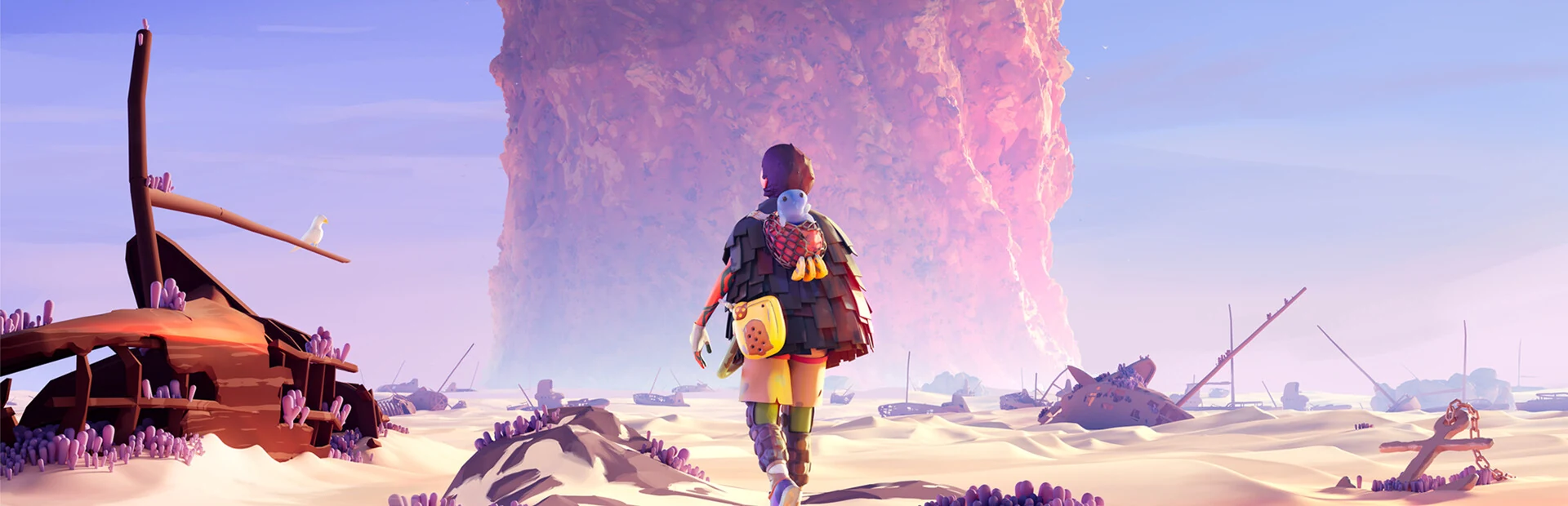
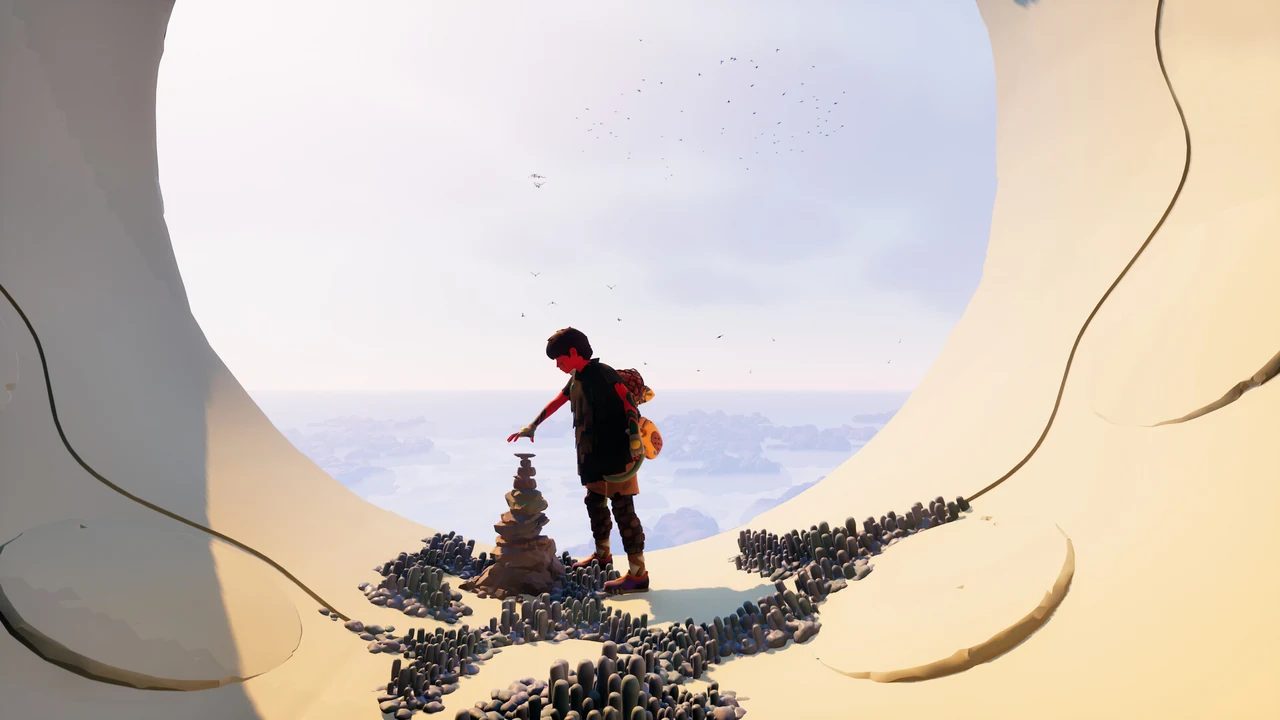
Jusant turns climbing into the main question rather than the space between other activities. The player studies a rock face, chooses a sequence of holds and manages the effort required to reach a useful resting point. Rope and pitons make the route more than a simple line upward, while the companion Ballast gives parts of the environment another way to respond. The early climb establishes a satisfying relationship between looking and doing. A visible ledge may suggest the goal, but the path to it still needs to be assembled from the available surfaces. Side routes and traces of former inhabitants add reasons to pause and examine the tower. For puzzle readers, the opening works best when approached as a succession of physical arrangements: where can the climber move, what support remains available, and where can the next decision be reconsidered safely?
A clear goal with smaller detours
Climbing provides a particularly tangible form of spatial reasoning. The player has to translate a view of the wall into a sequence of actions, then adjust that sequence as stamina, rope and terrain interact. The equipment gives the journey a sense of continuity: progress is not just reaching the next marker, but establishing a workable relationship with the surface. Ballast's influence on parts of the environment broadens the route vocabulary without replacing the central activity. Changing biomes also encourage the player to read the tower afresh, while environmental traces give its empty spaces significance. The strongest passages combine clear direction with uncertainty about the practical route. This lets the game remain focused without becoming entirely automatic. The satisfaction lies in making an imposing stretch of landscape understandable through a careful, achievable sequence of movements.
Height gives the environment meaning
Jusant's specialisation is also its principal constraint. Players who do not enjoy the feel of repeated climbing have little alternative activity to carry the experience. A route can sometimes be more about executing an identifiable sequence than solving an intricate new problem, so readers expecting dense, escalating puzzle logic should moderate that expectation. The storytelling is quiet and relies substantially on the environment and written traces, which may not provide enough momentum for someone wanting frequent dramatic scenes. Its depiction of height is integral to the setting and can be uncomfortable even when the mechanics themselves feel controlled. The game also asks the player to accept a measured rhythm of studying, moving and resting. Rushing through those transitions risks making a carefully paced ascent feel like a repeated procedure instead of a changing relationship with the tower.
Choose a focused ascent
Choose Jusant if spatial problems are most appealing when they can be physically explored. It suits players who enjoy reading terrain, identifying a route and carrying out a plan with a small, coherent set of tools. The quiet world and changing environments are especially valuable if atmosphere matters as much as the complexity of an individual obstacle. Readers looking for a difficult logic examination or a broad set of unrelated activities should consider a different game. The climb is the point, and appreciating its rhythm is essential. It can also work as a change of pace from more abstract puzzle systems, because the reasoning remains grounded in visible holds and believable movement. Approach the tower with attention to support, effort and the next place to pause, and its apparently simple upward goal becomes richly involving.
The verdict
A focused climbing adventure with satisfying physical reasoning. Reading a wall and establishing a workable route are its strengths; the measured, specialised activity determines whether the journey will appeal.
Reasons to play
- Visible holds turn route planning into a tangible task
- Rope and pitons give movement meaningful continuity
- Changing environments keep the ascent worth observing
Reasons to think twice
- Climbing remains the dominant activity throughout
- Quiet storytelling and a measured pace may feel too restrained
See the game
Assist & accessibility
Explore the available settings and control options on the official game page before choosing your setup.
Parents’ guide
Players: Single-player. No in-game purchase marker in the checked Steam listing. Separate downloadable content may be sold.
Age classification: 3. Xbox UK edition edition; not a separate PC classification
A useful starting tip
Look for a workable sequence of holds and resting opportunities before committing to the next stretch of climbing.
A different direction
Compare this with ANIMAL WELL: An inventive habitat of interlocking mysteries. Its small inventory supports unusually rich experimentation, while the sparse guidance makes patience an essential part of the experience.
Official sources
Reviewed: November 2026
You might also like
 TUNICRead review →
 ANIMAL WELLRead review →
 DorfromantikRead review →